












THE TIME IT TAKES
Inside Sjöö Sandström’s Stockholm workshop, where miniature engineering meets the human pleasure of making objects and bringing them to life.
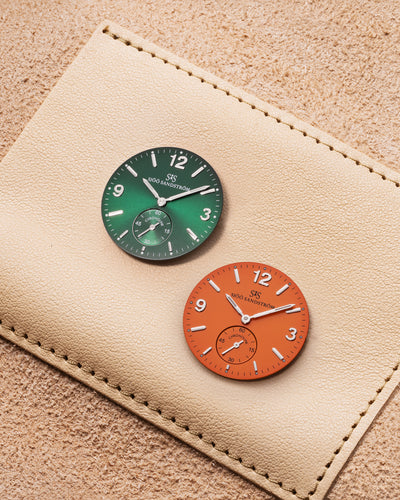
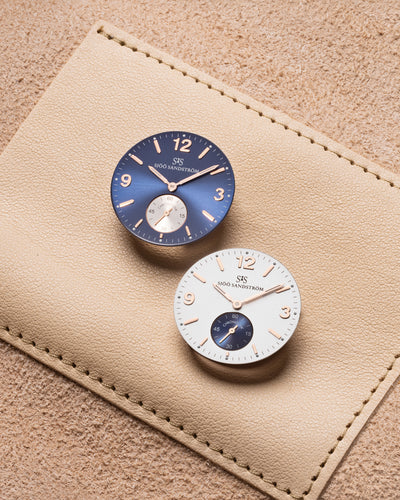
A watchmaker almost entirely hidden behind a microscope. Gloved fingers holding a blue dial beneath a magnifier. On a nearby workbench, an assortment of tiny screwdrivers, presses and instruments that could belong to a miniature engineering laboratory.
From a distance, the workshop appears remarkably still.
Look closer, and almost everything is in motion.
At Sjöö Sandström's Stockholm workshop, the work takes place on a scale most of us rarely encounter. Components are handled with tweezers. A dial is positioned beneath a press. A watchmaker brings a movement closer to the light. A magnifier helps guide a screwdriver into a screw barely visible to the naked eye.
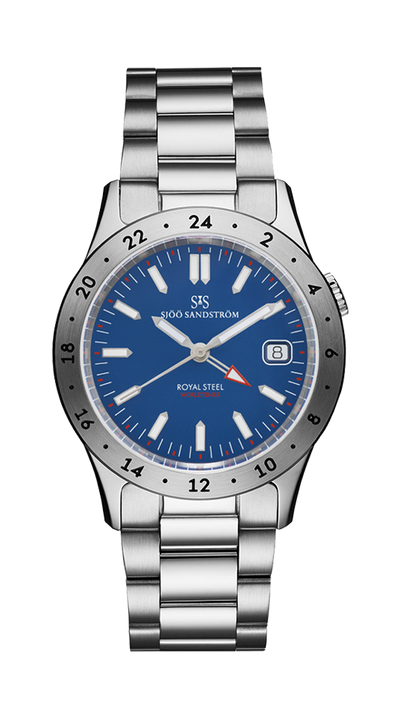
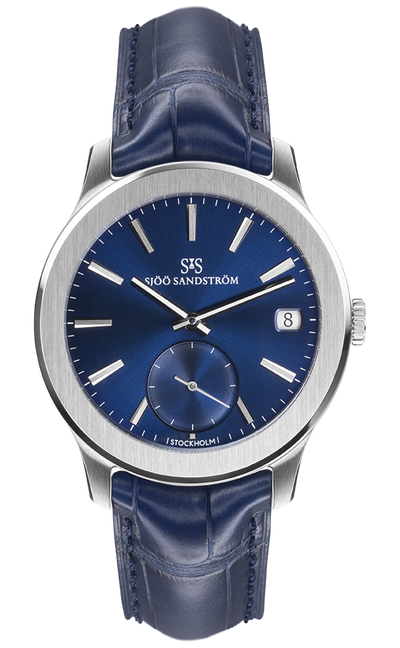
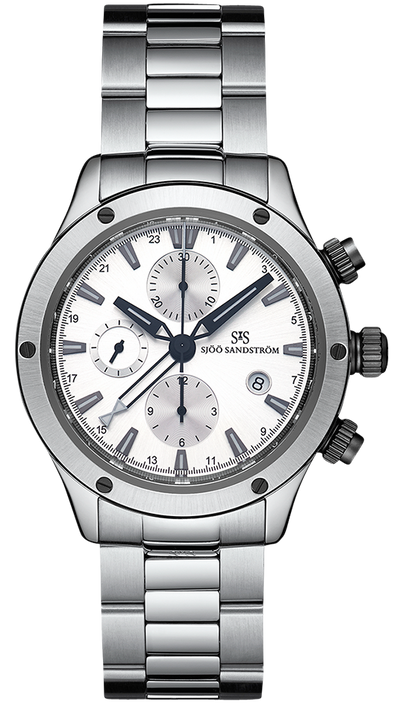
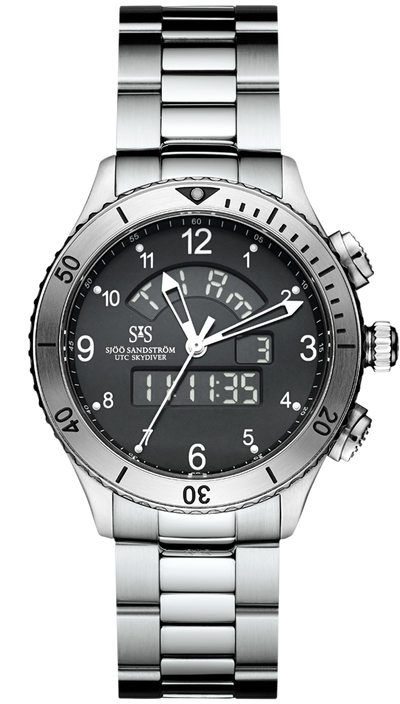
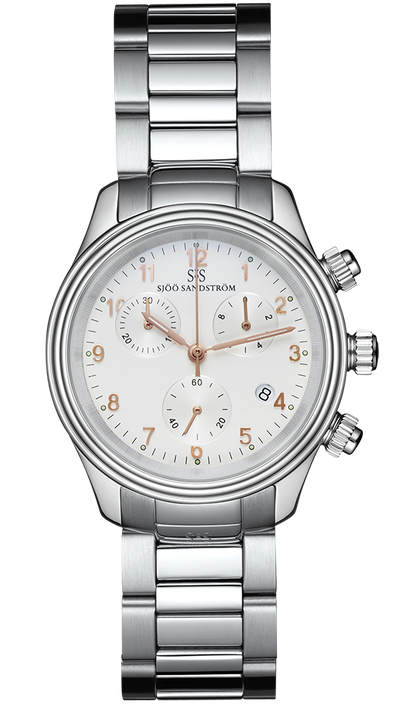
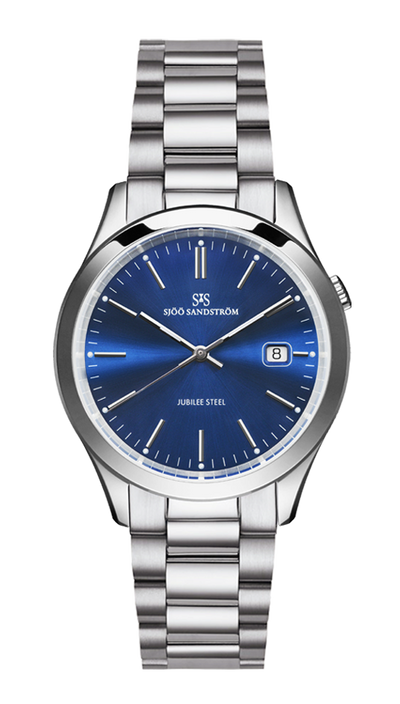
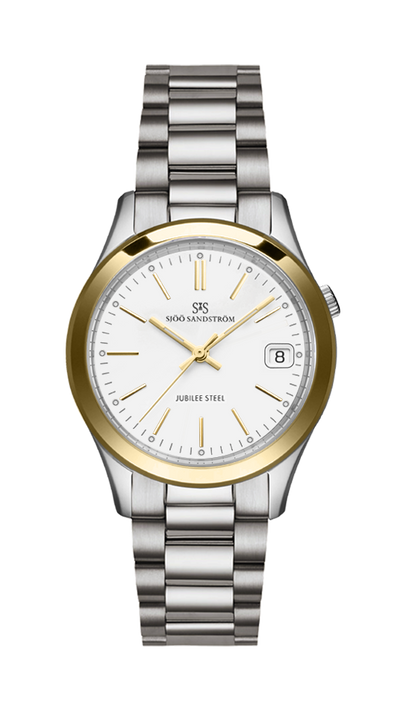
Here in Stockholm, Swiss movements are fitted with dials, hands, cases and all components to become complete watches. Each of them carefully built by a watchmaker, one pair of hands following it through the process.
It is the kind of work that makes you wonder how anyone manages to do it at all.

A world in miniature
There is something inherently fascinating about mechanical watchmaking.
Consider what a watch is expected to do. A collection of tiny mechanical parts must work together to measure time, day after day, inside an object small enough to wear on the wrist.
And that's before considering everything around the movement.
The dial must sit correctly. The hands must move freely, without touching one another. The case must protect the mechanism. The finished watch must function as intended, remain comfortable to wear and withstand the demands of everyday life.
Every element has a relationship with the next.
A tiny adjustment to one part can affect how another behaves. A detail that appears insignificant on its own can become essential once everything comes together.
At this scale, even the slightest misalignment makes a big difference.
"You can spend quite some time getting one small detail into place, then look at it through the loupe and decide to do it again."
The photographs offer a glimpse into that world. Magnifying lenses reveal details the naked eye would struggle to register. Specialised tools hold components in position. Fingers guide parts that appear almost impossibly small.

The pleasure of making
There is a particular satisfaction in making something with your hands.
Anyone who has built, repaired or created something will recognise at least a little of it. The absorption that comes from concentrating on a task. The fascination of understanding how things fit together. The pleasure of seeing separate parts become something complete.
Watchmaking takes that relationship to another level.
There is no way to persuade a component to fit by working faster. A movement cannot be rushed into running correctly. The mechanics set their own conditions.
Working at this scale requires an unusual combination of technical knowledge, concentration and physical control.
But there is also something wonderfully tangible about it.
The tools have a purpose. The parts belong somewhere. And gradually, an object that began as a collection of individual components becomes a functioning watch.
It is an ongoing exchange between the people who imagine the object and those who bring it to life. For all the sophisticated equipment involved, the process remains remarkably human.

Built for life outside the workshop
There is an interesting contrast between the world in which these watches are assembled and the lives they are made to accompany.
Inside the workshop, a component may be examined under magnification, protected by gloved hands.
Outside, the finished watch is expected to go almost anywhere.
It might spend its day beneath a shirt cuff, travel halfway across the world or accompany its owner through the rain.
Even Sjöö Sandström's dress watches are rated water-resistant to at least 100 metres.
It's a practical characteristic that says something about the way these objects are conceived.
An elegant watch should not necessarily need to be treated like a fragile one.
Once assembled, the watches undergo functional checks and water-resistance testing in Stockholm. Equipment is used to measure performance and verify that the finished product meets its requirements.
There is no glamour in a successful pressure test. It doesn't make a watch more beautiful. It makes sure it holds the promise it gives and that it is ready to be lived with.
Forty years of making watches
Sjöö Sandström was founded in Stockholm in 1986.
Forty years on, the workshop is still its beating heart.
The workbenches lit up with bright light. Hands at work. Instruments, components and faces of individuals absorbed in the task at hand.
Perhaps that is the most satisfying part of it all. So much attention goes into making an object that, once on the wrist, is a natural companion.


